

A lot of businesses pour time and money into building a website, writing content, and polishing their online presence, only to find that a good-looking site still doesn’t bring in visitors, leads, or sales. Great products and useful content aren’t always enough. A site can look perfect and still struggle to show up in search results, and the reason is rarely obvious. It’s usually buried somewhere in the website structure, the technical setup, how content is organized, or the experience visitors actually get once they land on a page.
That’s the gap technical SEO audit services are built to close.
A technical seo audit helps a business understand exactly what’s holding its website back in search engines. Rather than guessing or making changes based on hunches, an SEO consultant can pinpoint specific problems, rank them by importance, and turn that into an seo strategy grounded in real data rather than assumptions.
A proper audit doesn’t stop at rankings. It looks at whether the site is actually helping potential customers find the business and take action.
A well-run site audit can uncover:
- why key pages aren’t showing up in search results
- why organic traffic has plateaued
- why competitors keep outranking the site
- why visitors leave without ever making contact
- which technical seo issues are limiting visibility
For most website owners, the real value of a technical seo audit is clarity. It shows exactly where the site stands, what’s blocking growth, and which fixes will move the needle most.
What a Site Audit Actually Covers
Before spending money on SEO services, it helps to know the current condition of the website. A site audit gives a structured look at overall site health: the technical foundation, content quality, site structure, and the factors search engine crawlers rely on to find and rank pages.
The point of a site audit isn’t to hand over a giant list of warnings. Most audit tools will happily generate hundreds of them. What actually matters is figuring out which of those issues affect the business.
A solid technical seo audit should be able to answer questions like:
- Can search engines access and understand the key pages?
- Do the main services or products actually show up in search results?
- Is the site targeting the right keywords?
- Are there technical issues holding back growth?
- Are competitors capturing opportunities this site is missing?
The scope of the audit should match the business itself. A local business usually needs a close look at service pages, location pages, and local search visibility. An eCommerce site needs deeper analysis of product pages, categories, filters, duplicate URLs, and structured data. A SaaS company typically needs its landing pages, documentation, and product pages reviewed for scalable content opportunities.
Someone also has to own the process: reviewing recommendations, coordinating with web developers, and making sure fixes actually happen. Without implementation, even the most thorough site audit report changes nothing.
What Is an SEO Audit Service?
An SEO audit service is a detailed look at a website built to surface the issues and opportunities affecting its performance in search engines. Put simply, it answers one core business question: why isn’t this site getting the visibility and results it should?
A website depends on several connected pieces:
- technical seo
- content quality
- site architecture
- internal links
- user experience
- external authority
When one of those pieces breaks down, it drags down the site’s chances of ranking well and pulling in qualified traffic.
A technical seo audit zeroes in on the technical foundation: whether search engines can crawl, understand, and index the pages properly. That means checking crawl errors, broken links, redirects, robots.txt configuration, the XML sitemap, canonical tags, page speed, core web vitals, mobile usability, and structured data.
This kind of audit tends to matter most for businesses that have recently dealt with a sudden traffic drop, a redesign, a migration gone wrong, sluggish performance, or rankings that just won’t move.
But a complete SEO audit goes well past technical issues alone.
Content and On-Page SEO
Pages sometimes just don’t match what people are actually searching for. A content review looks at keyword targeting, search intent, title tags, meta descriptions, headings, content structure, duplicate content, and content gaps, all with one question in mind: does this page give users and search engines what they expect?
Website Architecture
Search engines need a clear structure to understand how pages relate to one another. Poor architecture creates real problems: important pages that are hard to discover, weak internal links, an unclear page hierarchy, and inefficient crawling.
Internal links matter here more than people realize. A site’s main service pages shouldn’t sit off on their own; they need supporting content, clear navigation, and internal links that signal their importance.
Competitor and Search Visibility Analysis
No website competes in a vacuum. Part of a proper technical seo audit is looking at competitors: which keywords they rank for, what kind of content performs for them, how their sites are structured, and where the gaps are. The point isn’t to copy what they’re doing, it’s to find where the business can offer more value than they do.
Why a Website Might Not Be Growing, Even With SEO Investment
Plenty of businesses invest in SEO and still don’t see the results they expected. Usually it’s because effort goes into visible activities while the hidden problems never get addressed.
Publishing more content won’t fix every SEO problem. Building backlinks won’t help a site that search engines can’t properly crawl. And more traffic won’t turn into more customers if the pages themselves don’t support conversions.
The Site Isn’t Showing Up for Important Searches
One of the most common reasons businesses look into SEO audit services is that their site simply doesn’t appear when potential customers search for what they offer. A site can be full of useful information and still send the wrong signals to search engines about what a page is about, who it’s for, and when it should appear.
Take a consulting firm as an example. Its homepage might explain the business well, but people are searching for specific things: business consulting services, financial consulting experts, consulting services for startups. If there’s no dedicated page for those topics, the business is leaving search opportunities on the table.
Keyword research helps identify what people are actually looking for, but the site also needs the structure and content to compete for it. Technical problems compound this: important pages blocked from crawling, incorrect robots.txt settings, missing internal links, duplicate pages competing against each other, wrong canonical tags, or a site structure that just doesn’t make sense. A technical seo audit catches these before they keep chipping away at organic visibility.

The Site Gets Traffic but Not Leads
Traffic only matters if it supports the business. A site can pull in plenty of visitors from search engines and still generate almost no inquiries, sales, or sign-ups, usually because it’s attracting the wrong audience or failing to guide people toward the next step.
A blog post targeting a broad, informational search might draw thousands of visitors who were never going to buy anything. SEO should chase qualified traffic: people who are more likely to actually become customers. An audit can flag pages pulling in irrelevant traffic, missing commercial landing pages, weak calls to action, poor internal linking, and content that misses the mark on search intent.
A lot of these conversion problems trace back to the website experience itself. Slow pages, hard-to-find information, confusing navigation, missing trust signals, and a rough mobile experience all push visitors away. SEO and conversion optimization work best together; the goal was never just to inflate a traffic number, it’s to bring in the right visitors and help them act.
Technical Issues Are Quietly Limiting Performance
Technical SEO problems are usually invisible to the people running the site. A visitor sees a normal-looking page while search engine crawlers might be struggling to access or understand that same content. A comprehensive technical seo audit reviews the technical foundation and flags anything that could be hurting rankings.
Crawl errors. Search engines rely on crawlers to find pages. Broken internal links, bad redirects, server errors, and blocked resources all get in the way, and broken links create a rough experience for real visitors too.
Indexing problems. Publishing a page doesn’t guarantee it gets indexed. Accidental noindex tags, duplicate content, wrong canonical tags, and missing sitemap data are common culprits.
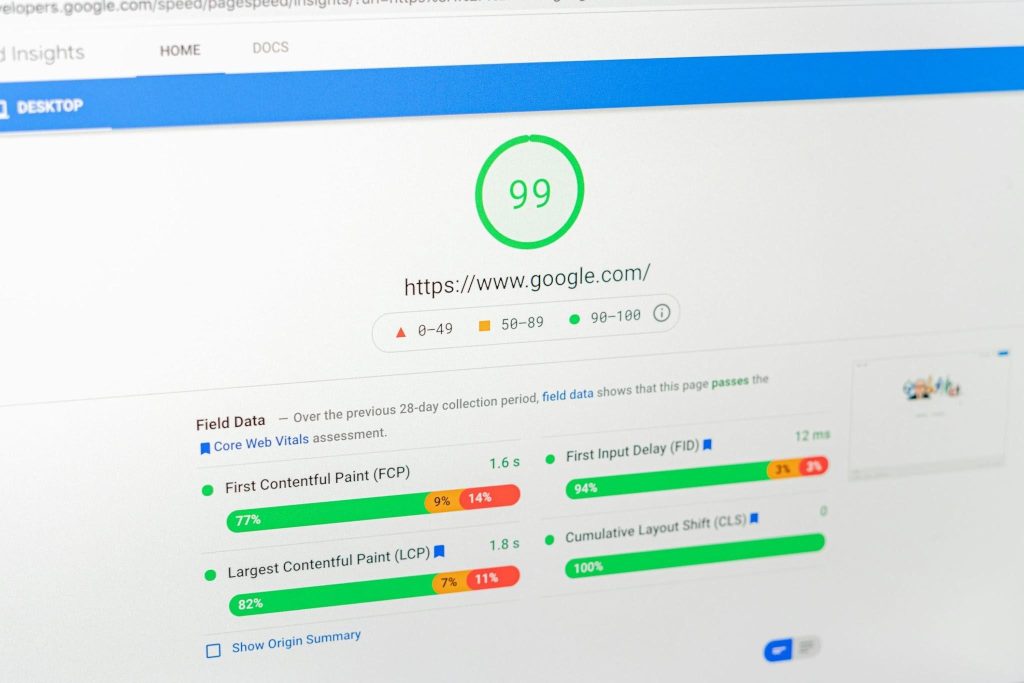
Speed problems. Page loading speed affects both users and search performance. A slow site loses engagement and gives visitors more reasons to leave before they even interact with the business. A technical seo audit looks at load speed, core web vitals, mobile performance, oversized files, and unnecessary scripts. Faster pages aren’t just a ranking factor, either; they make it easier for customers to browse, compare, and get in touch.
What Does an SEO Audit Service Include?
A worthwhile SEO audit service is more than a technical report full of red flags. It should explain how the site is performing, what’s blocking growth, and what a practical fix actually looks like. A complete audit typically covers technical seo analysis, content evaluation, on-page seo review, site architecture analysis, competitor research, and a search visibility review, with each area feeding a different part of the picture.
Technical SEO Audit
This part examines the foundation of the site: can search engines access, understand, and properly evaluate the pages? Even great content struggles to rank if the technical signals underneath it are broken.
Crawlability and indexation. Reviewing robots.txt files, XML sitemap configuration, crawl errors, blocked pages, indexation problems, and crawl budget issues. It’s surprisingly common for a site to block an important service page through a stray robots.txt rule; the page still exists, but search engines can’t reach it. On the flip side, too many low-value pages sitting in the index can make it harder for search engines to figure out what actually matters.
URL structure and redirects. Old pages get removed, URLs change, new sections get added, products get updated, and each of these can quietly break something. A technical audit checks HTTP status codes, broken pages, redirect chains, redirect loops, and unnecessary URL variations, because both users and search engines need a clean path to the right page.
Canonical tags and duplicate content. Product variations, filters, URL parameters, similar service pages, and copied content all create duplication, especially on larger sites. Canonical tags tell search engines which version should count as the main one; without that, multiple pages end up competing against each other and weakening overall search performance.
Core web vitals and page speed. A slow site means lower engagement, fewer conversions, and a poor mobile experience. This part of the audit covers page loading speed, core web vitals, mobile performance, heavy scripts, oversized images, and unnecessary resources. Improving site speed tends to pay off well beyond SEO.
Mobile optimization. Most traffic now comes from phones, so mobile performance isn’t optional. This covers responsive design, mobile usability, content visibility, button accessibility, and load speed on mobile devices specifically. A site that looks great on desktop but breaks on mobile is quietly losing customers.
Structured data and schema markup. Schema helps search engines understand what a page is really about, whether that’s a product, a review, an organization, a service, an article, or an event. Done right, it can improve how a page appears in search results, but schema alone won’t fix a site with weak structure or thin content behind it.
Content and On-Page SEO Analysis
Technical SEO gets search engines into the site. Content is what convinces them the pages deserve to rank for specific searches. A content audit checks whether the site is targeting the right topics and giving users real value.
Keyword research and search intent. Having content isn’t the same as having content that supports business goals. This part reviews target keywords, search intent, keyword relevance, competitor content, and missed opportunities. The idea isn’t to stuff keywords everywhere; it’s to build pages that answer the questions people are actually asking. Someone searching “how does accounting software work” is still researching. Someone searching “accounting software for small business pricing” is much closer to buying. A good seo strategy treats those searchers differently.
Title tags and meta descriptions. These shape how a site shows up in search results before anyone even clicks. The audit flags missing titles, duplicate titles, vague descriptions, and weak keyword targeting. A strong title tells the right person exactly what they’ll get if they click.
Content quality and optimization. A site can have hundreds of pages and still barely register organic traffic if those pages are outdated, thin, duplicated, competing for the same keywords, or simply missing important topics. The audit points to what needs improving, what needs updating, and where new pages could fill a gap. Producing more content isn’t the goal; producing content that actually supports a customer’s decision is.

Website Architecture and Internal Linking Review
Site structure shapes both the user experience and how well the site performs in search engines. A logical layout helps people find what they need and helps search engines understand how pages relate.
This review covers navigation structure, category organization, internal links, page hierarchy, and orphan pages.
Internal links connect pages across the site, help users find related information, help search engines identify important pages, and spread authority around the site. A blog post about a specific problem, for instance, can link straight to the relevant service page, tying informational content to commercial pages.
Orphan pages are pages with little or no internal linking pointing to them. They exist on the site but are genuinely hard for users and search engines to find. An audit helps decide whether each one should be improved, linked up properly, removed, or redirected.
Competitor and Search Visibility Analysis
A website’s competitors are targeting the same audience, whether anyone likes it or not. A proper audit looks at who’s ranking for the target keywords, what content is working for them, which topics they cover well, and where the gaps sit. That answers a question a lot of businesses ask sooner or later: why are competitors outranking us? Usually it comes down to stronger content, better site structure, more authoritative backlinks, a better user experience, or broader topical coverage. The point still isn’t to copy them; it’s to find where the business can genuinely do better.
What Problems Can SEO Audit Services Find?
Technical problems: pages blocked from search engines, crawl errors, broken links, incorrect redirects, duplicate pages, slow-loading pages, mobile usability issues, missing structured data.
Content problems: pages targeting the wrong keywords, missing service pages, weak content structure, outdated information, content cannibalization, gaps in topic coverage.
Conversion problems: high-traffic pages with poor conversion rates, unclear calls to action, weak landing page structure, confusing navigation.
Competitive problems: competitors publishing stronger content, targeting more specific keywords, holding more authority, or simply offering a better experience.
Spotting these gaps is what turns a vague sense that “SEO isn’t working” into an actual plan.
How a Professional SEO Audit Actually Runs
The exact process depends on the size and complexity of the site, but most audits follow a similar path.
Step 1: Discovery and data collection. The audit starts with understanding the business itself: main products or services, target customers, priority markets, competitors, and current SEO challenges. Access to Google Search Console, Google Analytics, the CMS, and hosting information makes the analysis far more accurate.
Step 2: Website crawling and analysis. The site gets crawled with professional tools to surface technical issues, indexing problems, broken links, duplicate content, and structural problems. That raw tool output is only the starting point; the real work is figuring out which of those findings actually matter for the business.
Step 3: Prioritizing issues. Not everything needs fixing today. A good audit separates critical issues (blocked important pages, incorrect indexation, major technical failures) from high-impact improvements (fixing key landing pages, cleaning up internal linking, updating content) and longer-term opportunities (content expansion, authority building, international SEO).
Step 4: Building the roadmap. The final output is a clear plan: what needs fixing, why it matters, who owns it, and what impact it’s likely to have. That’s what makes SEO manageable for a team instead of just a pile of technical jargon.
Tools an SEO Specialist Actually Uses
A technical seo audit takes more than checking whether pages exist or keywords appear somewhere on the page. No single technical seo audit tool catches everything, which is why solid audits combine crawl data, analytics, search performance data, and manual review.
Google Search Console is one of the most important tools for understanding how Google actually sees the site: which search queries bring in traffic, which pages show up in results, indexing problems, crawl issues, technical warnings, and shifts in search performance. If traffic suddenly drops, Google Search Console usually helps narrow down whether it’s a ranking loss, an indexing issue, a technical error, or just a shift in search demand.
Google Analytics connects SEO performance to actual user behavior: which pages bring in organic traffic, how people move through the site, which pages generate leads, conversion paths, and engagement patterns. Rankings only tell part of the story; analytics fills in what happens after someone lands on the page.
Screaming Frog and other crawlers simulate how search engines move through a site, surfacing broken links, missing title tags, duplicate meta descriptions, bad redirects, canonical problems, indexation issues, and URL structure problems. For a large eCommerce site with thousands of product pages, a crawler is often the only realistic way to catch duplicate URLs from filters, pages quietly eating up crawl budget, or outdated pages still sitting in the index.
SEO platforms like Ahrefs and Semrush handle competitive research: keyword rankings, competitor visibility, backlink profiles, content opportunities, and search trends. They’re useful for answering which keywords competitors rank for, which pages bring them traffic, and what content opportunities a site might be missing.
What a Real SEO Audit Report Should Include
A common mistake is accepting an audit that’s just a wall of flagged issues. A useful site audit report explains what the problems actually mean and what to do about them.
Executive summary. A plain-language overview of what’s working, what’s holding the site back, and what should get fixed first. Business owners shouldn’t need deep technical knowledge to follow the main points.
Technical SEO findings. Crawl errors, indexing problems, broken links, page speed issues, mobile problems, structured data errors, and redirect issues, each with a clear explanation, the affected pages, the business impact, and a recommended fix.
Prioritized action plan. No business needs 300 individual recommendations. A good roadmap sorts tasks into high impact (issues that could meaningfully improve visibility or stop losses), medium impact (changes that support ongoing growth), and low impact (smaller optimizations that can wait). That’s what lets a team actually use its time well.
When Should a Business Invest in SEO Audit Services?
Plenty of companies wait until something’s clearly broken, but an audit is worth the most before problems get expensive.
- Organic traffic has stalled. If traffic looks about the same month after month, something is quietly holding it back, whether that’s competitors improving their sites, content that no longer matches search intent, technical roadblocks, or missing keywords.
- A redesign is coming. Website redesigns are one of the riskiest moments for SEO. Changing URLs, navigation, page structure, or content without a plan can wipe out existing rankings fast. A technical seo audit before migration protects that visibility.
- The site has never been properly reviewed. Sites accumulate problems over years: broken links, duplicate pages, outdated content, weak internal linking, unnecessary URLs. A full website audit gives a clear read on where things actually stand.
- SEO spend isn’t showing results. If a company is already spending on content or link building without seeing much return, an audit can reveal whether the effort is even going toward the right things. Sometimes it’s not a lack of SEO work, it’s that the wrong priorities are getting the attention.
SEO Audit Services vs. Automated Reports
A lot of website owners have already run their site through some kind of automated website audit tool. These tools have their place: they’re fast, easy to run, useful for a basic check, and inexpensive.
Their limitations show up quickly, though. Automated reports tend to flag every possible issue without understanding business goals, and they can’t really judge which problems are worth solving first. An automated audit tool might report hundreds of duplicate pages without ever explaining whether those pages are actually hurting search performance.
A professional SEO audit consultant adds the context a tool can’t: technical problems, search visibility, competitors, business priorities, and what’s realistic to implement. The real difference isn’t just finding more problems, it’s knowing which ones are actually worth fixing first.
How Metricado Approaches SEO Audits
At Metricado, we look at SEO audits from a business angle first. A website audit isn’t really about the technical details in isolation. The real question is: what’s stopping this site from attracting more qualified visitors and turning them into results?
Our audit process looks at how search engines access the site, how real users find the business, which pages hold untapped opportunity, where competitors have an edge, and which improvements would move the needle most. That means digging into technical seo, site structure, content performance, search visibility, user behavior, and conversion opportunities, then turning all of it into a practical roadmap instead of just another list of errors. Your team walks away knowing what needs fixing, why it matters, and how it will actually improve the site’s performance.
Whether it’s a small business site, an eCommerce platform, or a large international website, a proper technical seo audit gives you the information to make better decisions about where growth comes from next.
Conclusion
A website can look flawless on the surface and still carry hidden problems that quietly cap its growth. Technical issues, weak site structure, content that misses search intent, and unclear priorities can all keep a business from reaching customers who are already searching for what it offers.
SEO audit services exist to surface those problems and turn them into a clear direction. The best audits don’t stop at finding errors; they tie technical analysis back to business goals, and they leave you with a clear sense of why the site isn’t growing, what’s blocking better rankings, what to fix first, and how SEO fits into long-term growth.
If you want a clear read on what’s limiting your site’s performance, reach out to Metricado for an SEO audit consultation and a practical improvement roadmap.
FAQ
What is a technical SEO audit?
A technical seo audit examines the technical elements of a site that affect how search engines crawl, understand, and index its pages, covering site speed, crawlability, redirects, structured data, mobile performance, and indexing.
What is included in an SEO audit service?
An seo audit service typically covers technical analysis, content review, site architecture evaluation, competitor research, and recommendations for improving search visibility.
How often should a website have an SEO audit?
It depends on site size and how often the business changes. Many companies run one after a major update, a redesign, a migration, or when organic performance starts slipping.
Can an SEO audit improve rankings?
Not directly. It identifies what’s holding rankings back and gives recommendations that support better performance over time.
How long does an SEO audit take?
It depends on complexity. A small site might be reviewed in a few days, while a large site with thousands of pages needs a much deeper pass.
What’s the difference between an SEO audit and a technical SEO audit?
A technical seo audit focuses mainly on infrastructure: crawling, indexing, speed, and configuration. A full SEO audit adds content, keywords, competitors, and overall strategy on top of that.
Can an SEO audit help after a traffic drop?
Yes. It can help pin down the cause, whether that’s a technical problem, a ranking change, a content issue, or a recent site update.
Do I need SEO audit services if I already use SEO tools?
Tools are good for collecting data, but a technical seo audit consultancy adds the analysis, prioritization, and business context that a raw tool report can’t provide on its own.